-->
Showing posts with label japanese lesson. Show all posts

Wednesday, April 3, 2013

[Cover] SAKURA (Ikimono gakari)


「SAKURA」
Original by Ikimono gakari いきものがかり

I'm back in Singapore for 2 weeks for easter break and decided to record a song before impending dental work (:S). Since its cherry blossom season (or well towards the end of it!) and also graduation time in Japan, I decided to pick this song by Ikimono gakari, which is a very cool band with a youthful vibe, and they have many other good songs that I like too. ^^ Kiyoe sings typically with a very fresh, strong, almost brash, belting voice and well I didn't want to do the same so this is a more toned down version which I hope you'll like!

Since I'm learning Japanese too, here are some words I learnt from singing this song XD. To learn them, just follow the song as the words are taken in the order they appear.

ひらひら hirahira = Fluttering
落ちて ochite = ochiru = to fall
揺れる yureru = to shake/sway
散る chiru = to fall/scatter/disappear/spread
抱きしめた dakishimeta =dakishimeru = to hug close/hold tight
おもかげ omokage = vestige
通った = pass
出た deta = deru = to come out
色づく irozuku = to change color (esp. plants)
川辺 kawabe = riverside
それぞれ sorezore = each
選び erabi = select
終えた oeta => 終える to finish to graduate
咲き(bloom)誇る(to boast of) sakihokoru = to be in full bloom
焦らせて arasete = araseru = to be in a hurry/impatient
映る utsuru = to be reflected/to harmonize with/to come out(photo)/to be projected
受け入れて ukeirete= ukeireru= to accept
ひらく hiraku = to open/spread out/hold or give a party, conference etc.
超えて koete =koeru = to pass through, to exceed, to cross over
こうやって kouyatte = thus, in this way
かな kana = I wonder, should I?
伸ばすnobasu = to grow long (beard, hair, etc.); to lengthen; to extend; to stretch; to reach out; to hold out; to straighten; to smooth out; to spread evenly (dough, cream, etc.); to dilute; to thin out; to postpone; to prolong; to strengthen; to develop; to expand
抱き(daki=dakuto embrace)寄せた (yoseta=yosete= to come near; to let someone approach)
つつまれて tsutsumarete =tsutsumu = to wrap up
残る nokoru = to remain
夢見し yumemishi = yumemiru = to dream
誓いし chikaishi => chikau = to swear/vow.

phew.
now to start studying. =_=

Tuesday, March 12, 2013

JP lesson: How to change informal verb to -masu form + complete verbs negative conjugation

今日は!また日本語の授業の時です。昨日のクラスに先生はこれを教えました:
Good day! Yet again time for another japanese lesson. Yesterday, the teacher taught this:

How to easily change original form (dictionary/casual/informal) verbs into -masu (polite/formal):
If its 五段动词:
Change the last hiragana to equivalent "i" in the same column i.e. “ぃ”段 and then add -masu.
For example:
busy = isogu 急ぐー>急ぎます。
write = kaku 書くー>書きます
buy = kau 買うー>買います
return = kaeru 帰るー>帰ります
die = shinu 死ぬー>死にます
fly = tobu 飛ぶー>飛びます
drink = nomu 飲むー>飲みます
speak = hanasu 話すー>話します
hold = motsu 持つー>持ちます

簡単だね?じゃ次!

一段动词(e+ru or i+ru):
Remove the "ru" at the end and replace with -masu.
For example:
wake up = okiru 起きるー>起きます
eat = taberu 食べるー>食べます

Suru -> Shimasu
Kuru->Kimasu 

How to change to negative for polite form verbs:
Simply change -masu to -masen!

So as a practice summary, we had to do this on the spot:
会う to meet ー>会わない to not meet
会いますto meet (polite)ー>会いません to not meet (polite)

5 yomu 読むー>読まない。読みますー>読みません
1 miru 見るー>見ない。見ますー>見ません
5 arau 洗うー>洗わない。洗いますー>洗いません
5 kaku 書くー>書かない。書きますー>書きません
5 nomu 飲むー>飲まない。飲みますー>飲みません
5 hakobu 運ぶー>運ばない。運びますー>運びません
5 tsukuru 作るー>作らない。作りますー>作りません
1 abiru 浴びるー>浴びない。浴びますー>浴びません
5 toru 撮るー>撮らない。撮りますー>撮りません
5 yaru やるー>やらない。やりますー>やりません
5 hiku 引くー>引かない。引きますー>引きません
5 inoru 祈るー>祈らない。祈りますー>祈りません
5 iu 言うー>言わない。言いますー>言いません
5 kaburu 被るー>被らない。被りますー>被りません
1 tsukeru 付けるー>付けない。付けますー>付けません
1 kakeru 掛けるー>掛けない。掛けますー>掛けません
1 kiru 着るー>着ない。着ますー>着ません
5 haku 履くー>履かない。履きますー>履きません

See the pattern?
To see how to categorize verbs into 五段动词 and 一段动词 see this post.

Wednesday, March 6, 2013

JP lesson: Set phrases of Noun + Verb

This week's Japanese class notes (paper is too easy to lose compared to cyberspace's permanent record isn't it?).

As in how english has phrases like "to catch a cold" which doesn't make too much literal sense, Japanese has similar set phrases (idioms?) as well. These are the examples from class this monday.

お経を読む(おきょうをよむ)to read scriptures
新聞を読む(しんぶんをよむ)to read the newspaper
夢・映画を見る(ゆめ・えいがをみる)to see a dream/movie
手を洗う(てをあらう)to wash hands
手紙を書く(てがみをかく)to write a letter
水を飲む(みずをのむ)to drink water
荷物を運ぶ(にもつをはこぶ)to transport luggage
料理を作る(りょうりをつくる)to cook (lit: to make food)
電話を掛ける(でんわをけける)to make a call (lit: to hang up a phone)
Showerを浴びる(をあびる)to bathe
写真を撮る(しゃしんをとる)to take a photo
野球をやる(やきゅうをやる)to play baseball (lit: to do baseball)
旅行をする(りょこうをする)to travel
車を運転する(くるまをうんてんする)to drive (lit: to move a car) 例えば:車を運転する事が難しいです。
日本語を勉強する(にほんごをべんきょうする)to study japanese language
風邪を引く(かぜをひく)to catch a cold (lit: to pull wind)
漢音様の御加護を祈る(かのんさまのおかごをいのる)
空を飛ぶ(そらをとぶ)to fly in the sky (Note: this is a set phrase though it makes sense to say sora ni tobu)
気を付ける(きをつける)to take care
面倒を見る(めんどうをみる)to look after 例えば:子供の面倒を見ることが面倒くさいです。
文句を言う(もんくをいう)to complain (tsukeru also means dip/pay)
帽子を被る(ぼうしをかぶる)to wear a hat (kaburu = to cover)
眼鏡を掛ける(めがねをかける)to wear glasses (kakeru = to hang)
服を着る(ふくをきる)to wear clothes
手袋を付ける(手袋を付ける)to put on gloves
ズボンを履く(をはく)to put on trousers. haku = putting on items in a bottom up motion.
靴下を履く to put on socks
靴を履く to put on shoes

We also learnt a new sentence structure, and that is Verb + koto ga (事が)+ adjective.

Also the meaning is the same: 勉強する=勉強をする、学習する=学習をする 等等, but the left hand side is a verb and the right hand side is a noun+verb.

But the structure is different:
日本語(N)勉強する(V)事が好きです。(N+を+V)
日本語(N)勉強(N)をする事が好きです(N+の+N) rmb:N+が+Adj

Plural forms:
私ー>私たち
貴方ー>貴方がた
彼ー>彼ら
彼女ー>彼女ら

Random new words:
裏(うら)=inside
撮影(さつえい)=film
説明(せつめい)=explain 例えば:日本語の文法(ぶんぽう)を説明することが難しい。
注射(ちゅうしゃ)=inject
薬(くすり)=medicine

Wednesday, February 27, 2013

JP lesson: Verb conjugations


Here's my weekly japanese class summary again! 

During yesterday's class, the teacher taught basic verb conjugations; positive and negative. 昨日のクラスに、先生は動詞の活用を教えた。 It was a revision for me since I had kinda forgotten it though I've learnt it before.


Basically to change 動詞 to negative (否定形);

for 五段动词:change last hiragana character to “あ” 段+ない。
例えば:
to read 読む(よむ)→読まない
to jump/fly 飛ぶ(とぶ)→飛ばない
to play 遊ぶ(あそぶ)→遊ばない
to drink 飲む(のむ)→飲まない
to meet 会う(あう)→会わない
to know/understand 分かる(わかる)→分からない
頂く(いただく)→頂かない
to hurry 急ぐ(いそぐ)→急がない
to tire 疲れる(つかれる)→疲れらない
to trial/experiment 試み(こころみ)→試みらない
to sleep 眠る(ねむる)→眠らない
to ascend/climb 昇る(のぼる)→昇らない
to move 動く(うごく)→動かない
to hit 殴る(なうる)→殴らない
to serve/work/be employed 勤める(つとめる)→勤めらない
to work/labour 働く(はたらく)→働かない
to sit 座る(すわる)→座らない
to hold 持つ(もつ)→持たない

for 一段动词、とても簡単です。Just replace る with ない
* Special 一段动词, not 五段 *寝る(ねる)→寝ない
to tidy up/put in order 片付ける(かたづける)→片付けない
to give 上げる(あげる)→上げない
to exist/be 居る→居ない

for (サ)する -> しない
to marry 結婚する→結婚しない

for (不)来る(くる)来ない

Whether a word is a verb or an adjective or how it is conjugated depends on its ending hiragana character. For example, 
Left-ADJECTIVE / right-VERB
欲しい(want)ー>欲しくない・欲しがる(to desire, to want, to wish for)ー>欲しがらない
楽しい(happy)ー>楽しくない・楽しむー>楽しまない
悲しい(sad)ー>悲しくない・悲しむ(to be sad/to mourn for/to regret)ー>悲しまない
痛い(painful)ー>痛くない・痛む(to hurt/to feel pain/to be injured)ー>痛まない

In general, verbs can also be split into 2 types:自動詞(Vi) と 他動詞(Vt)
A subject cannot be added after a 自動詞(Vi) e.g. run, cry, speak
But can be added after a 他動詞(Vt) e.g. love + you, tell + you, eat + it.
The significance is that after a 自動詞(Vi) use が, but after a 他動詞(Vt) use を before a verb.
例えば:Vi→鳥が飛びます。Vt→寿司を食べます。
Sentence order in japanese is subject + object + verb.

終わった!
じゃまた!


Tuesday, February 19, 2013

Jap lesson + update

今日は、日本語のクラスがまた始まるよ。今日のlesson covered some basic sentence structure。For my own note-taking, here is a short summary in a mishmash of chinese, english and japanese:

-----Japanese language notes----

Something kute/de, something desu.
For nouns and 'な' adjectives:

___くて、___です = 又———,又———。or ———,而———。
                                            i.e. ______, and also _____. or ______, while ______.
For ‘い’ adjectives:
_______で、_____です。

例えば1:彼女はきれいで、かわいいです vs 彼女はかわいくて、きれいです。
She is pretty, and also cute.

例えば2:これは二百円で、これは二百八十円です。
This is 200yen, while this is 280yen.

'kara'= 'because'(also means 'from').
因为——————,所以——————。

例えば:彼女はきれいで、かわいいから、好きです。
Because she is pretty and cute, I like her.

Numbers
100 = 百(ひゃく)、
1000=千(せん)、
1,0000=万(まん)、
1,0000,0000=億(おく)
1,0000,0000,0000=兆(ちょう)
例えば:9、8765、4321=九億(きゅうおく)はっせんななひゃくろくじゅうごまん(八千七百六十五万)よんせんさんぜんにじゅういち(四千三千二十一)。

Japanese verbs
Japanese verbs all end with ’う’。That is the original form (原形)e.g. 走る、飛ぶ、読む、泳ぐ。
There are 3 groups: 五段形容词,一段形容词 and 不规则形容词。

A) The easiest category is 不规则形容词 which contains ’する’ (to do) と’くる’ (to come) only.

You can use する after any noun which can also be used as a verb and vice versa such as practice/practise = 練習する、study/studying = 勉強する、marriage/marry = 結婚する、love/to love = 愛する.

Foreign nouns can also be used e.g. download ダウンロードする。

B) 一段形容词 has 2 sub categories 上一段 and 下一段。

All 一段形容词 must fulfill 3 conditions:
1. Must end in る。
2. Must have an い (i+ru is 上一段) or え(e+ru is下一段) that is not in a kanji character before る。
例えば:食べる、is 一段形容词 while 喋る(しゃべる)is not and therefore is 五段形容词.

C) Every other verb that is not in group A or B is 五段形容词. i.e. don't end with 'ru' or ends with a+ru, u+ru or o+ru.

Then lesson ended here! I've learnt verb conjugations before (my pet peeve) but forgot all of it and trying to do them mostly ends up in confusion so am looking forward to getting it right again!

----
Japanese gibberish aside,

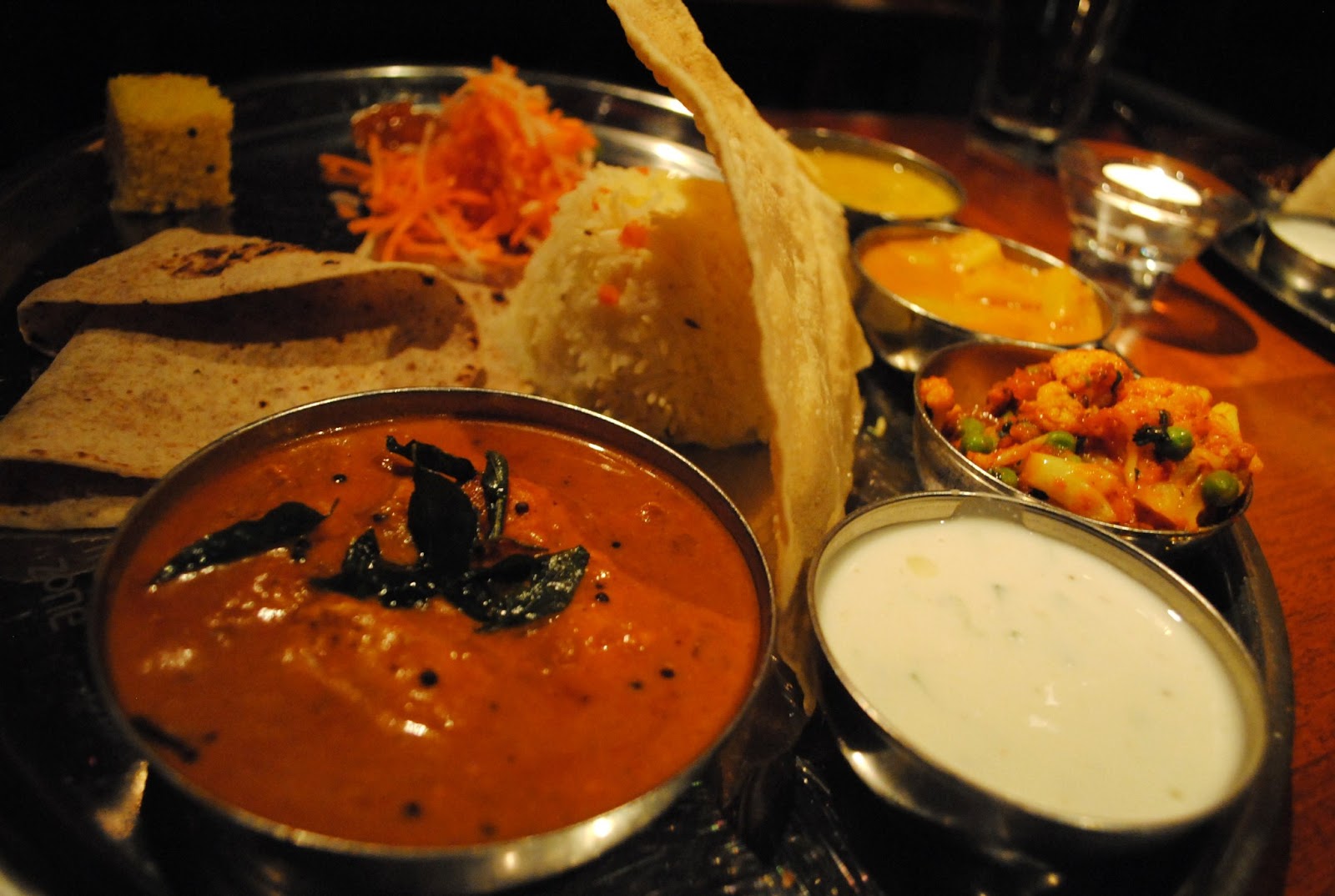
Eschewed the french, italian, japanese, chinese, lebanese, filipino restaurants down the street in favour of indian for vday dinner lol. Usually I would associate vday dinners with something western cause hailing from an asian country, anything else seems less formal. But being in the UK, pasta is a staple food and supermarket prep dinners are usually western styled, so comparatively curry seems like a much more enticing bolder flavoured choice. "Masala zone" had candlelights/dimmed lighting so the atmosphere was comfortable anyways. The indian food is not bad, we ordered a grand thali each.


That reminds me I still need to visit a singaporean/malaysian restaurant for some cny fare!
Related Posts Plugin for WordPress, Blogger...